Introduction
AI detection tools have become increasingly visible in academic discussions over the past two years. As generative AI tools grow more advanced, universities are adapting their academic integrity policies to address new forms of assisted writing.
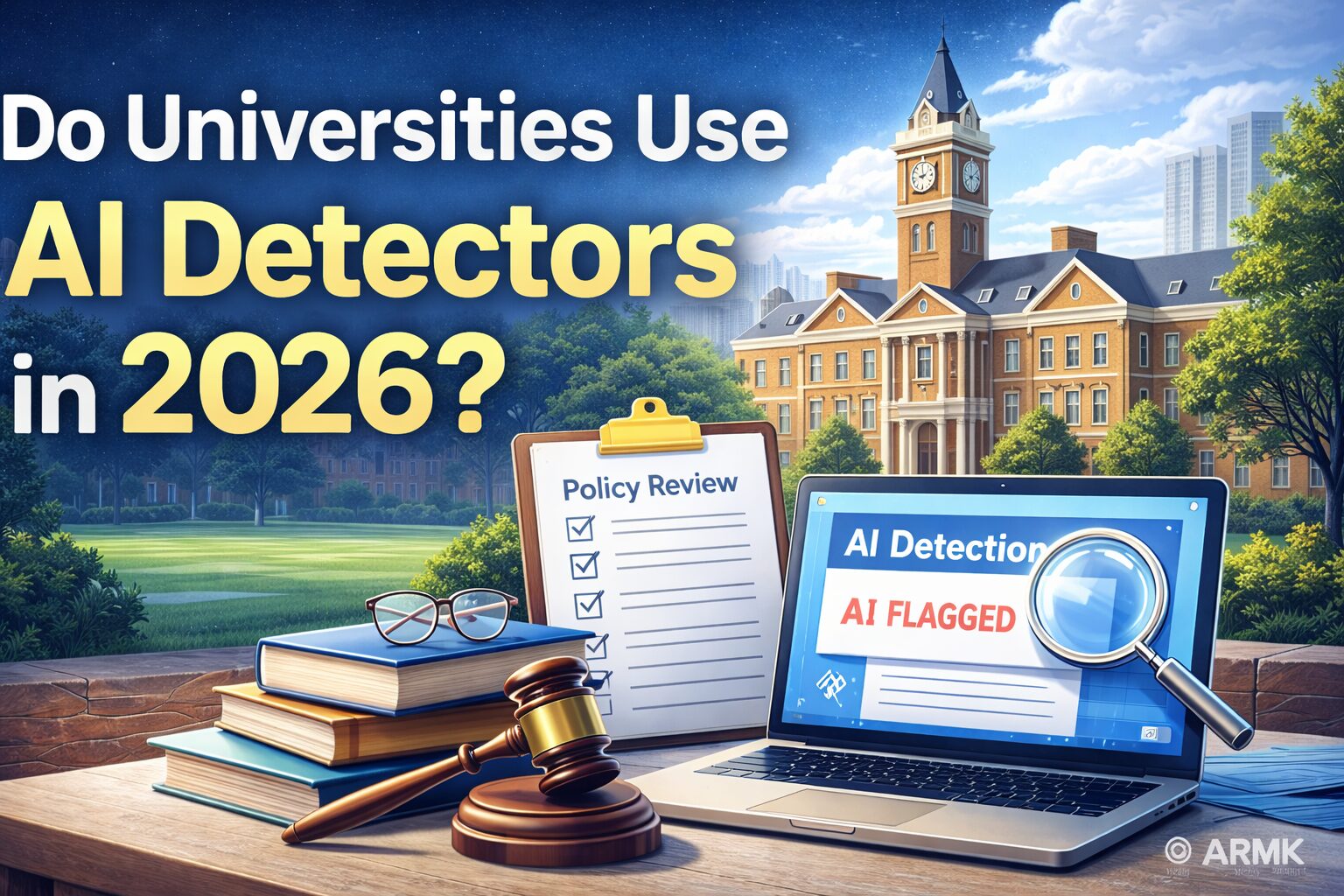
But do universities actually use AI detectors in 2026?
The answer is not uniform. Adoption varies by country, institution size, academic department, and internal policy framework. Some universities have integrated AI detection into existing plagiarism systems. Others rely primarily on instructor review.
Understanding how institutions approach AI detection requires looking at policy, workflow, and review procedures — not just detection scores.
Table of Contents
Do All Universities Use AI Detectors in 2026?
No.
There is no global mandate requiring universities to use AI detection tools.
In 2026:
- Large research universities are more likely to integrate AI detection systems.
- Institutions already using plagiarism platforms often adopt AI detection modules within those systems.
- Smaller colleges may rely on manual review rather than automated scoring.
- Some institutions explicitly limit how AI detection scores can be used.
Adoption is increasing, but it is not universal.
AI detection is typically treated as one component of broader academic integrity monitoring — not a standalone enforcement mechanism.
Which AI Detection Tools Are Commonly Used in Universities?
Universities that implement AI detection systems most commonly use:
- Turnitin (integrated into institutional learning systems)
- Copyleaks (education-focused detection platform)
- GPTZero (used in some external or supplemental contexts)
These tools generate probability-based reports indicating the likelihood that content was AI-generated.
However, most institutions do not treat these percentages as automatic proof of misconduct.
If you want a technical breakdown of how these systems function, see our guide on How AI Detectors Work in 2026.
Are Professors Required to Run AI Detection Checks?
This depends on institutional policy.
In some universities:
- AI detection is automatically embedded in assignment submissions.
- Instructors receive AI probability reports alongside plagiarism scores.
In others:
- Running AI detection is optional.
- Faculty members decide whether to use detection tools.
- Departments set their own guidelines.
Many institutions combine plagiarism detection and AI detection into a single review process.
The key point: policies are decentralized. Individual instructors often retain discretion.
What Happens After an AI Flag?
An AI detection score alone does not usually result in automatic penalties.
When a submission receives a high AI probability score, the review process typically includes several steps:
- Instructor Review
The instructor evaluates the report and reads the submission carefully. - Writing Style Comparison
Past assignments may be reviewed to assess consistency in tone and structure. - Draft History Review
If the assignment was created using tools like Google Docs or learning platforms, revision history may be examined. - Student Clarification Request
In some cases, students are asked to explain their writing process. - Academic Integrity Review (If Escalated)
Formal review may occur if concerns remain after instructor evaluation.
This workflow shows that AI detection functions as a signal — not an automatic verdict.
For scenarios involving disputed flags or false positives, see our separate analysis:
Can AI Detectors Be Wrong? What Students Should Do After a False Flag (2026).
Can Universities Automatically Fail Students Based on AI Scores?
In credible academic policy frameworks, no.
Universities generally avoid relying solely on AI detection percentages for disciplinary decisions.
Most policies emphasize:
- Human review
- Context evaluation
- Evidence beyond automated scoring
- Due process procedures
AI detection reports support academic integrity processes, but they do not replace instructor judgment or committee review.
If you’re evaluating how reliable those detection scores actually are, our breakdown of AI Detection Accuracy in 2026 examines the data behind reported percentages.
Do AI Detection Policies Differ by Country?
Yes. Institutional approaches vary by region.
United States
Many universities integrate AI detection into existing academic integrity systems. Policies typically require human review before formal action.
United Kingdom & Australia
Turnitin integration is widespread. However, institutions emphasize that AI detection percentages are indicators, not proof.
India
Adoption is increasing, particularly in larger universities. Policies continue to evolve, and many institutions are still formalizing AI-related guidelines.
There is no standardized global policy governing AI detection use.
When Universities May Not Use AI Detection
There are scenarios where AI detection tools may not be central to evaluation:
- In-person handwritten examinations
- Oral defenses or presentations
- Practical or project-based assessments
- Courses emphasizing iterative drafts and feedback
In these contexts, instructors often rely more heavily on observation, engagement, and subject understanding.
What Students Should Understand About Institutional AI Use
AI detection systems are primarily used as:
- Risk indicators
- Integrity monitoring tools
- Supplemental review mechanisms
They are not designed to replace human academic evaluation.
Understanding institutional workflow reduces misinformation and unnecessary assumptions about automatic penalties.
Final Assessment
In 2026, many universities use AI detection tools — but not all.
Where adopted, these systems typically:
✔ Generate probability-based reports
✔ Support academic integrity processes
✔ Trigger human review
They do not:
✘ Automatically assign misconduct
✘ Operate as standalone judgment systems
✘ Replace instructor evaluation
AI detection in universities is a procedural tool within broader academic integrity frameworks.
At AI Tools Guide, we don’t hype tools — we test how AI actually works.
Institutional AI detection reflects risk management and evolving academic standards, not automated punishment systems.
For personal pre-submission checks, students often use free AI detectors. Here’s a structured comparison.
FAQs
1. Do all universities use AI detectors in 2026?
No. Adoption varies by institution, region, and department. Many universities use AI detection tools, but policies differ widely.
2. Can a university fail you automatically based on an AI score?
Reputable institutions typically do not rely solely on AI detection scores. Human review and contextual evaluation are part of the process.
3. What happens if a professor sees a high AI score?
The instructor usually reviews the submission, compares writing patterns, and may request clarification before escalating the matter.
4. Are AI detectors mandatory in all academic institutions?
No. Some institutions integrate them automatically, while others leave usage to instructor discretion.