
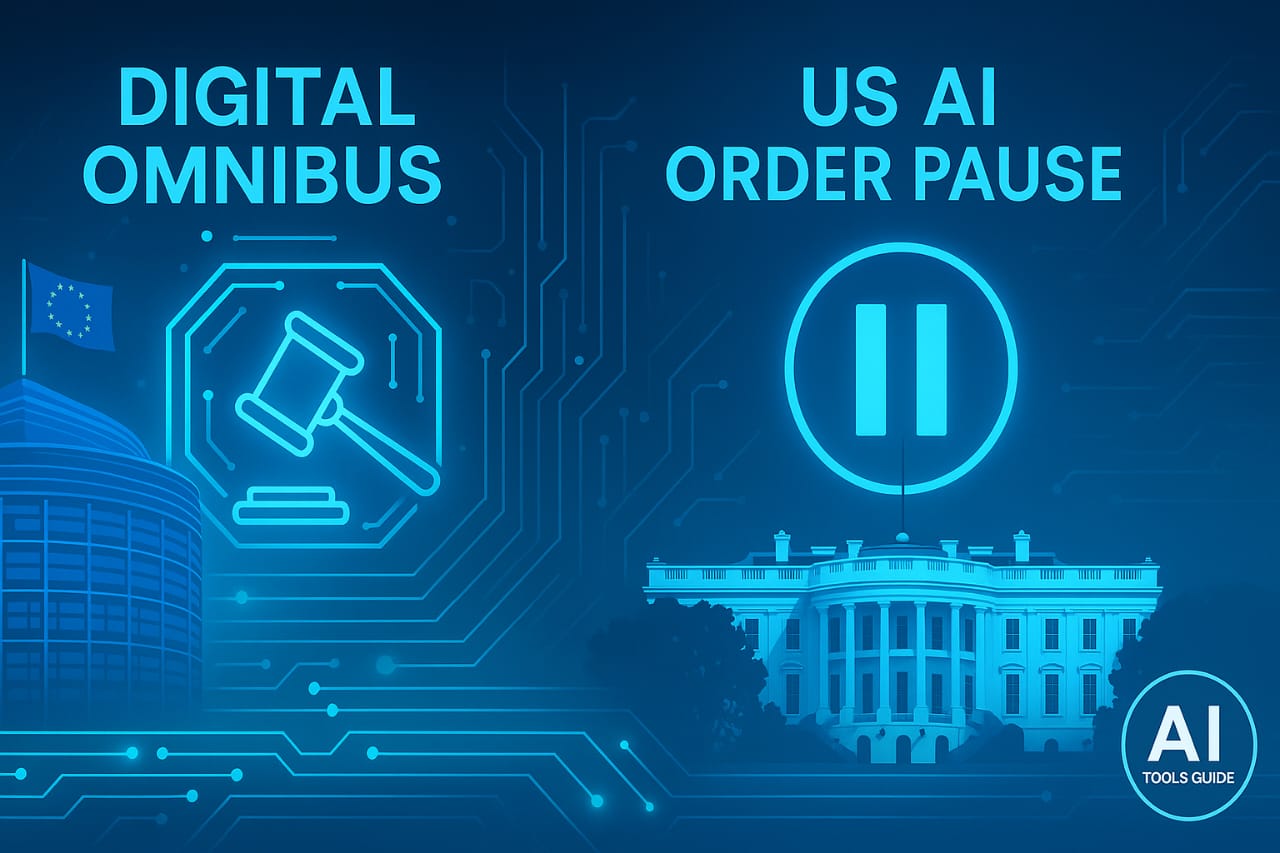
The global AI landscape saw a major regulatory twist this week as two of the world’s biggest AI blocs — the US and European Union — signaled very different directions.
In the US, the White House has paused a draft executive order that would have allowed federal authorities to override state-level AI regulations and tie certain funding to compliance. The move indicates growing internal disagreement on how aggressively Washington should centralize AI governance. State-level AI laws — especially around transparency, deepfakes and data protections — may now regain influence.
Meanwhile in Europe, the European Commission has unveiled its new Digital Omnibus package: a sweeping proposal that simplifies AI, cybersecurity and data rules while delaying some obligations from the AI Act. The goal is to reduce regulatory friction, accelerate AI innovation, and offer companies a clearer compliance path across EU markets.
For AI tool builders, developers and startups, the implications are significant:
- The US market may become more fragmented, with different rules per state.
- Europe is shifting toward flexibility, signalling a more innovation-friendly phase.
- Cross-jurisdiction compliance will matter more than ever.
As global AI adoption accelerates, this regulatory divergence could reshape how AI products are built, deployed and monetised across markets.
Explore More on AI Tools Guide
Gemini 3 Update (recent Google AI news post)