✍️ Introduction
If you’ve ever wondered what an AI writing tool is, you’re not alone.
In 2026, bloggers, students, and marketers are using AI-powered tools to write faster, smarter, and SEO-optimized content. But what actually happens behind the screen? Let’s decode how AI writing tools work, why they’re changing the writing industry, and which ones can supercharge your productivity.
Table of Contents
🧩 What Is an AI Writing Tool?
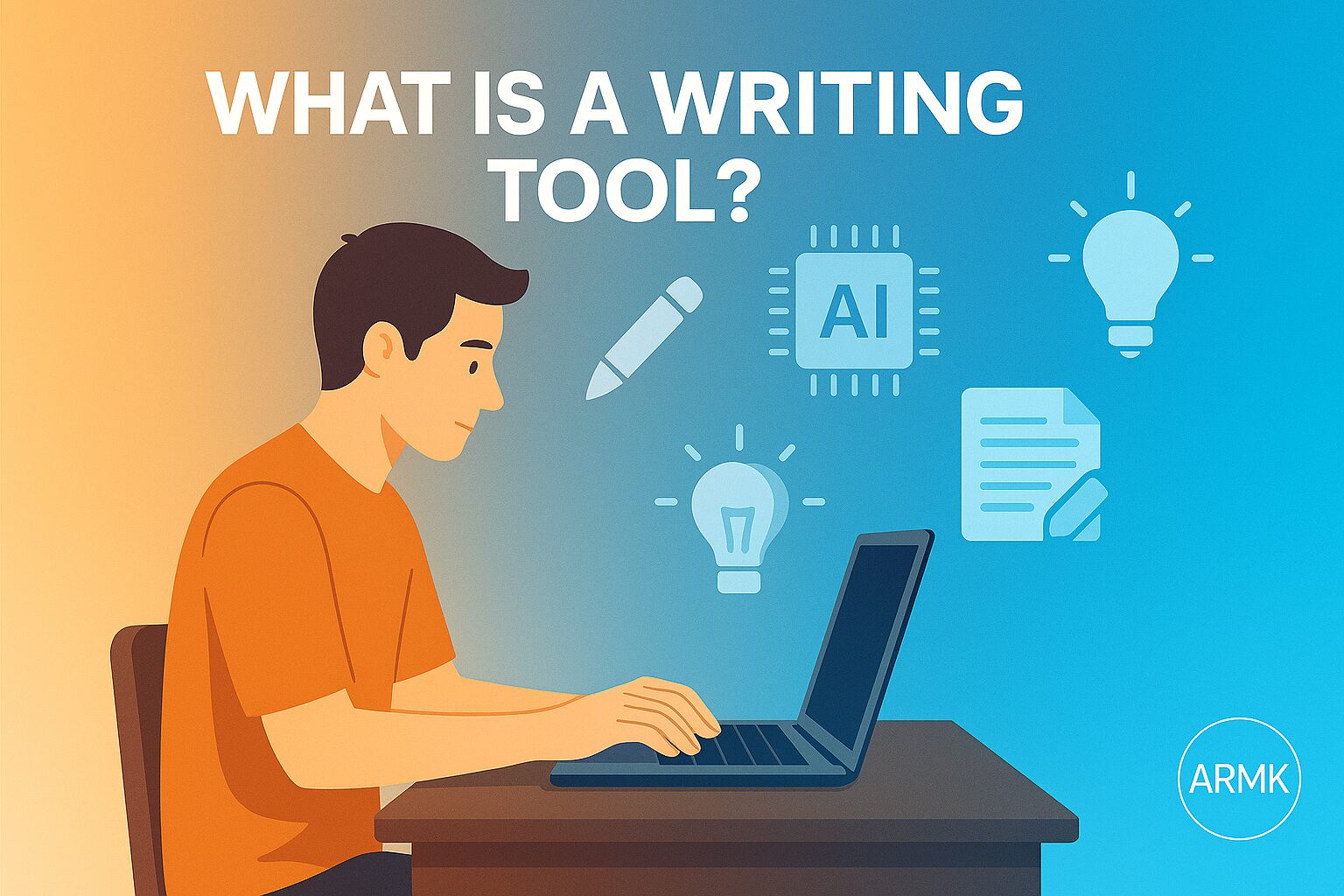
An AI writing tool is software that uses artificial intelligence and natural language processing (NLP) to generate, edit, or optimize text automatically.
These tools analyze huge amounts of online data, understand grammar and tone, and then help you write blog posts, captions, emails, or essays in seconds.
Think of them as your digital co-writer—they don’t just write; they help you brainstorm, research, and refine ideas.
⚙️ How AI Writing Tools Work
To understand how AI writing tools transform your ideas into high-quality drafts, let’s look at how they actually work. The following visual shows each step of the process, from idea to final output.

Each stage reflects how AI supports the writer — analyzing data, generating drafts, and refining tone and structure to deliver content that’s clear, engaging, and optimized for SEO.
AI writing tools use machine learning algorithms and language models like GPT-4 or Claude 3 to understand your prompt.
They:
- Analyze your topic and target keywords
- Predict relevant text patterns
- Generate optimized sentences
- Offer grammar and tone corrections
- Suggest SEO keywords and structure
💡 Example: Type “write an SEO-friendly blog introduction,” and tools like ChatGPT or Writesonic instantly produce a high-quality draft ready to refine.
🧠 Which AI Writing Tool Should You Use? (Based on Your Goal)
Not all AI writing tools are built for the same purpose.
Choosing the wrong tool is the biggest reason people say, “AI tools don’t work.”
Here’s a goal-based breakdown so you don’t waste time 👇
| Your Goal | Best AI Writing Tool | Why It Works |
|---|---|---|
| SEO blog writing | Writesonic / Scalenut | Keyword planning, SEO structure, long-form support |
| Academic & paraphrasing | QuillBot | Accurate rewriting, citation-friendly output |
| Grammar & clarity | Grammarly AI | Real-time grammar, tone, and plagiarism checks |
| Marketing & ads | Jasper AI / Copy AI | Conversion-focused copy and templates |
| Research-based writing | Perplexity AI | Source-backed answers, citations |
| Creative storytelling | Sudowrite | Narrative flow, fiction support |
👉 Rule of thumb:
If your goal is ranking on Google → SEO tools matter more than “smart writing.”
🧠 Key Features of AI Writing Tools
- Content Generation: Create blogs, captions, emails, or scripts
- SEO Optimization: Suggest keywords and meta descriptions
- Grammar & Tone Checking: Improve readability instantly
- Paraphrasing & Rewriting: Rephrase existing content without losing context
- Plagiarism Detection: Ensure originality
- Multilingual Writing: Write in multiple languages with native accuracy
These features make them useful for SEO blogging, content marketing, and even academic writing.
🚀 Benefits of Using AI Writing Tools
| Benefit | How It Helps |
|---|---|
| Speed | Write full-length posts in minutes |
| Accuracy | Auto-fixes grammar and tone errors |
| Consistency | Keeps style uniform across articles |
| SEO Edge | Suggests ranking keywords naturally |
| Productivity | Helps focus on ideas, not just wording |
📈 Whether you’re optimizing a blog or creating marketing copy, AI tools for SEO blogging 2026 help you publish more and perform better.
Most Used AI Writing Tools in 2026 (Tested Use-Cases)
AI writing tools are everywhere in 2026 — helping students, bloggers, and professionals write faster and smarter.
Here are some of the most popular ones you should know 👇
1. ChatGPT 5 – Conversational & Creative Genius
ChatGPT 5, developed by OpenAI, helps you write essays, blogs, and emails through natural conversation.
It’s great for brainstorming ideas, summarizing long texts, or explaining complex topics in simple language.
👉 Explore ChatGPT’s official site to experience it firsthand.
📎 Read More: 🧠 Tested and rated by students — discover how ChatGPT 5 actually performs in 2026. → Full Review & Verdict
ChatGPT is Best for brainstorming, explaining concepts, and drafting ideas fast.
👉 Not ideal alone for SEO-optimized long blogs.
📝 2. Grammarly AI – The Student’s Lifesaver
Grammarly AI detects grammar errors, improves clarity, and checks plagiarism in real-time.
Perfect for students and professionals who want clean, error-free writing.
👉 Editing tool, not a full content generator..
🔗 Learn more on Grammarly’s official page.
📎 Read More: Grammarly AI Review 2026
🚀 3. Jasper AI – Long-Form Writing Expert
Jasper AI creates SEO-optimized long-form content for blogs, ads, and brand storytelling.
Its templates and tone customization make it ideal for business and professional use.
👉 Visit Jasper AI’s website to explore its writing features.
📎 Read More: Jasper AI Review 2026
✍️ 4. Copy AI – Creative Social-Media Writer
Copy AI helps you create catchy social-media captions, ad hooks, and product descriptions in seconds.
Best for marketers, freelancers, and students managing content quickly.
🔗 Try Copy AI’s official site for your next post.
📎 Read More: Copy AI Review 2026
💡 5. Writesonic – SEO Blogger’s Assistant
Writesonic focuses on creating optimized articles with AI images and keyword targeting.
It’s a great tool for bloggers and agencies who need fast content that ranks.
👉 Visit Writesonic to explore SEO blog generation.
📎 Read More: Writesonic SEO Blogging Guide
🎯 6. QuillBot – Paraphrasing & Academic Tool
QuillBot rephrases sentences, summarizes research, and improves readability — perfect for academic writing.
🔗 Try it at QuillBot.com. Or know more about QuillBot Paraphrasing
🌟 7. Scalenut AI – SEO Powerhouse
Scalenut helps bloggers create long-form content using NLP, keyword clustering, and SERP optimization.
📎 Read More: Scalenut for SEO Content
(Each of these tools plays a unique role—some focus on creativity, others on optimization.)
🌍 Difference Between AI Writing & Human Writing
| Aspect | AI Writing | Human Writing |
|---|---|---|
| Speed | Instant draft creation | Time-consuming |
| Creativity | Pattern-based | Emotion-driven |
| Accuracy | High, data-trained | Depends on expertise |
| Originality | Sometimes repetitive | Deeply unique |
| Best Use | Drafting, rewriting, SEO tasks | Storytelling, emotion, nuance |
🤝 The future isn’t about replacement—it’s about collaboration. 🤝
Want a deeper, honest breakdown of AI vs human writers in 2026?
👉 AI Writing Tools vs Human Writers in 2026: What Actually Wins?
🔗 Recommended Reads (Go Deeper)
If you want to see how these tools perform in real-world blogging and SEO workflows, check these detailed guides:
- Best AI Writing Tools (2026) – Full comparison for bloggers & creators
- Best AI Tools for SEO Blogging – Tools that actually help you rank
- Simplified AI Writer Review 2026 – Complete Guide for Bloggers & Content Creators
- Best AI Tools for Students – Study, assignments & clarity explained
👉 These guides break down pricing, pros, cons, and who should use what.
❓ FAQs
Q1. What is an AI writing tool used for?
It helps create, edit, and optimize text using artificial intelligence for blogging, SEO, or content marketing.
Q2. How do AI writing tools help in SEO blogging?
They suggest keywords, improve readability, and structure content for higher search rankings.
Q3. Can AI replace human writers?
No. AI assists with speed and structure, but human creativity and emotional touch remain irreplaceable.
Q4. Which are the best AI writing tools in 2026?
ChatGPT 5, Jasper AI, Writesonic, and Grammarly AI are top-rated options.
🏁 Conclusion
AI writing tools are no longer optional — they’re productivity multipliers.
But the real advantage doesn’t come from using AI, it comes from using the right AI tool for the right job.
Whether you’re a blogger, student, or marketer, the tools you choose in 2026 will directly affect:
- how fast you create content
- how well it ranks
- and how much effort you save
Start with one tool, master it, and then expand — don’t tool-hop blindly.